|
|
Additional
information on
|
|
Nikon (Nippon
Kogaku K.K.) Finder Group of Accessories
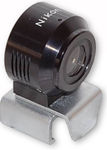
for Nikon S-Mount Nikon Rangefinder (RF) cameras
|
HTML File Size: 72K Loading ... 3rd draft
06.04.2011
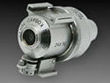
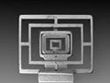
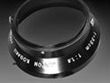
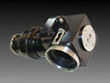
| Optical Finders provides correct picture composition
and perspective control for rangefinder cameras. Over the last five decades, Nikon
has produced a large varieties of optical finders or prisms in various forms, size
and purposes. If it includes the Nikon reflex cameras, Nikon has the largest collection
of finders produced for cameras. This is mainly because the accessory finder originally
developed for the rangefinder camera series has evolved as metered prisms for the
single-digit Nikon F bodies. Until the Nikon F5, every F series SLR camera models
has a modular body to enable inter-changeability of finders. Finders for the Nikon
rangefinder camera series was more treated like an accessory because due difference
in the differing focusing system used. Focusing in a rangefinder camera has its weakness
at both ends of the ultrawideangle and telephoto range. This was mainly the reason
that has contributed to the development of so many of these optical accessories.
Basically, they offer improved level for the sake of ease of picture composing and/or
perspective control. They don't provide focusing match but simply offer as an alternate
form of picture framing aid. |
 |
The accessory finders for Nikon S-series models are basically
separated into three major groups. One is individually designed to fit a specific
focal length or lens type. Another group use a zooming principle where most of the
popular focal lengths are provided each with an index. The last is grouped under
special finder accessories. The most basic form is the first and the last groupings
with the second group which had gone through further redevelopment and/or being improved
its features in stages. Most of the finders were sold as optional accessories by
Nikon. In some instances, they were supplied along with a specific lens-type as a
standard accessory. Lastly, early versions are usually chrome, late or improved models
were usually have a black finishing (except for the Varifocal zoom finder which still
has a chrome finishing). Depends on individual model, most of the Nikon S-series
cameras after the Nikon SP (1957) were provided with an in-finder bright-line frames
which cover most of the popular focal lengths from 3.5cm, 5cm, 85cm, 10.5cm and 13.5cm.
Examples: Nikon
SP: 28/35/50/85/105/135mm; Nikon S3:35/50/105mm; Nikon S4: 50/105mm; S3M: 35/50/105mm.
For shorter lenses (ultrawide) which didn't provide
with such an in-camera feature, Nikon will supply a special finder as lens standard
accessory Some good examples are Nikkor-O 1:4 f=2.1cm,
W.Nikkor.C
1:4 f=2.5cm. As all Nikkor lenses beyond
13.5cm (180mm, 250mm, 350mm, 500mm and 1,000mm) where in-camera focusing is beyond accuracy. These long telephoto
lens series were being designed to use in conjunction with Nikon Reflex Housing
and thus, slip-on camera finder accessory is not required.
|
| Credit: Image courtesy of Mr. Mike Otto <staff@pacificrimcamera.com> URL: Pacific Rim Camera, who also operates a popular Ebay Store. Image Copyright © 2003. All rights
reserved. Pacific Rim camera can also be reached by mail to: Pacific Rim Camera 1965
Davcor St SE Salem, OR 97302 (503) 370-7461 Fax number is (503) 370-8801 |
| For single focal length finder or "individual
finder" as Nikon called them), the early models were just to provide as
a form of picture framing assistance as well as for adjusting to parallax. The later
model usually were generally being improved in few aspects, particularly with a built-in,
etched frame lines and has a overall brighter finder image. They also have provision
to adjust parallax correction. The most innovative finder group among all the Nikon
RF finders are the Variframe and the Varifocal Zoom finder. These series of finders
provide universal usage. They also have a variable focal length control adjust to
individual focal lengths. The usual focal length provided are from 35-135mm. The
Special Finder group includes some of the earlier mentioned lens-type specific finder(s).
In addition to those, Nikon has others such as 35mm Mini Viewfinder, Sport frame
Finder and some odd and rare series for special application photography. Towards
the interim period between the rangefinder / Nikon reflex models, some of the lenses
had been designed with a dual systems use but due to the differences of the accessory
shoe design as well as the difference of mounting foot, some of them may not be interchangeable
between the two formats. For photographers, even if the camera has a provision for
a bright-line frame for certain lenses to assist picture framing and focusing control,
he may decide which option best suits his personal needs. This section only aims
to provide some information pertaining to some of the most popular types of optical
finder accessory to supplement the various Nikkor pages for the Nikon rangefinder
system. |

|


|
|
|
|
|
|
|
|
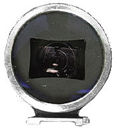
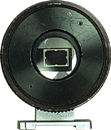
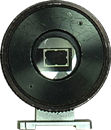
Finder for 2.1cm Nikkor-O
|
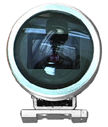
Finder for
2.5cm W.Nikkor
|
Finder for
2.8cm W.Nikkor
|
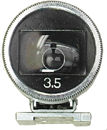
Finder for
3.5cm lenses
|
Finder for
8.5cm
Nikkor lenses
|
Finder for
10.5cm
Nikkor-P/T
|
Finder for 13.5cm
Nikkor Lenses
|
| |
|
|
|
|
|
|
| For dedicated finder for any given focal length, please click on the relative section above to find the exact info for specific focal length. This site
only addresses the variable options (third group) special edition optical finders
as well as the popular series of universal finders. |
|
|
|
 |
 |
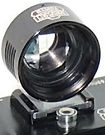
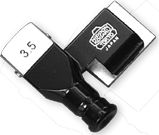
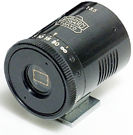
<<<--- Most of the early versions on single-focal length
optical finder accessory have a typical chrome finishing to match the early series
of rangefinder lenses. Late models have better features. Shown are two types of Finder.
The 3.5cm mini-viewfinder as well as another late 13.5cm finder which has a bright-line
frame. The later models usually (but not always) have a black finishing.
|
|
Special 3.5cm Mini Finder
|
Bright-line frame Finder for single
focal length lenses
|
Nikon made Finders for CONTAX cameras
|
 |
 |
 |
| Credit: Image at the left
courtesy of Mr. Kelvin Li from his popular gokelvincameras
@ Ebay Store
which retails for many hard-to-find Nikon, canon, Contax oldies. Image Copyright
© 2003. All rights reserved. Please respect the visual property of the contributing
photographer. |
| |
 |
<<<--
another major Japanese maker, Canon RF optical finder models are very similar to
the Nikon designed models. Chrome are the early versions, black and bright-line frame
are late models.
|
|
NOTE:-
Comparing Nikon designed Finder Types with some of the popular Contax Carl Zeiss Jena / Zeiss Ikon Finders / Leica/Leitz Finder
versions
Part One:- Dedicated
Finder for Fisheye Nikkor lens(es) / Dedicated Finder
for Nikon Stereo Nikkor 3.5cm
Nikon can probably claimed as the first 35mm
camera manufacturer to put their research effort of Fisheye principle to commercial
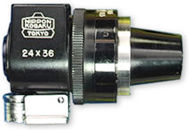
use. Most Nikon folks would thought the 1962 Fisyeye-Nikkor 8mm f/8.0 was the Company's
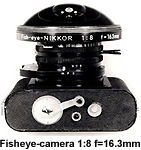
first fisheye lens (technically it was not wrong) but as early as in 1960, Nikon
had already had an on-camera fixed
Fisheye Nikkor 16.3mm f/8.0 that provides 180 degree CIRCULAR image picture angle.
The camera provides shutter speed from 1-500 sec. with M / X sync contacts and built-in
filters. It was a rare piece of old Nikon collectible.
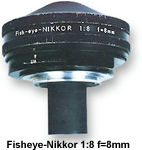
Then in 1962, Nikon has unveiled their first true interchangeable Fisheye-Nikkor
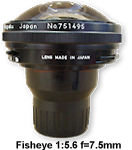
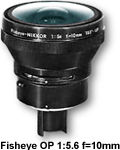
1:8 f=8mm. It followed by another Fisheye-Nikkor 1:5.6 f=7.5mm in 1965/6. The more
well known Fisheye-Nikkor 1:5.6 f=10mm which arguably used world's first aspherical
lens element in it optical design was only being delivered to the market in 1968.
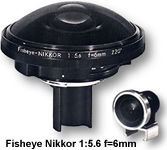
It was followed by the widest wideangle lens in 35mm photography, Fisheye-Nikkor
1:5.6 f=6mm in 1969. All these lovely pieces of old Nikkor optic have one thing in
common: the rear section of the lens tube reaches so far into the camera body that
only Nikon bodies that were equipped with a Mirror-Lockup be able to use them. |
 |
 |
Question 1:
how would the photographer be able to perform focusing and composition since the
viewfinder is blackout after the reflex Mirror is raised ? Fisheye are evolved form
of image projection from normal ultra-wideangle lenses. They have tremendous depth
of field even when used in their largest to mid range aperture(s) and with a little
care, it makes focusing literally unnecessary As for photo composition, it makes
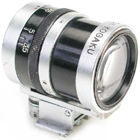
use of an accessory optical finder just as the Nikkor-O 1:4 f=2.1cm.
The finder is simply served as a visual assessment for a rough, approximate guide
as circular fisheye lenses projected image is in circular form and not rectilinear
Credit: Image courtesy of Photo_Arsenal-Worldwide® Germany. The Company also maintains
an active EBAY Store, trading many used and new photo equipment of various labels. Photo
Arsenal can be contacted at Photo Arsenal Boris Jamchtchik, Altenfurter Str.16a 90475
Nuernberg Germany Tel.: +49 (0) 911/ 4008081 E-Mail: ebayshop@arsenal-photo.com.
.Image(s) copyright © 2008. All rights reserved. Please respect the visual property
of the contributing photographer.
|
 |
 |
| Question 2:
This is more relative to rangefinder - I am not sure if any of the Fisheye Nikkor
lenses featured here are able to use on any of the Nikon S-series models (due to
the difference of mount on the two systems). But I often see people mixed this finder
and relate the F-mount Fisheye Nikkor lenses with rangefinder Nikon cameras. OR is
there a way to use them via adapters ? IF answer is a NO. Then just treat these info
as additional reading reference for the F/Nikkormat. IF ever such combination exists,
then here are just some basic information. As far as my knowledge goes, there wasn't
a RF version for any of these Fisheye-Nikkor series. Thank You. |
Part Two Special Finder for Nikon's Stereo-Nikkor
f=3.5cm 1:3.5 moderate wideangle lens (Introduced: Dec.1956~discontinued: approx. 1960).
One of the rarest Nikkor lens is the Strereo-Nikkor 5mm
f/3.5. If you managed to locate one out from old garage from your grandpa, you can
exchange for many top of the line Nikon Digital SLRs from D3 all the way to D8 ...
I am not familiar with Stereo Nikkor lens type but due to its scarcity - making it
one of the most source after Nikkor lens by Nikon collectors. One example the two
recent auctions conducted by Photo Arsenal, Germany
at ebay, a full outfit (Without the Camera) has a commanding buy-it-now price of
USD46,000-00; while another with just the bare basic lens only (no finder and accessories)
still has a price tag of USD15,000-00. The Stereo Nikkor looks different from normal
lenses because it has a twin lens formation. It allows simultaneous 2 x 17x24mm exposures
via its two 35mm lenses, each covering a 45.5° picture angle and project an ortho stereoscopic
image in a sandwiched 35x24mm film format.
 |
The finder for the Nikon Stereo Nikkor f=3.5cm 1:3.5
lens only known to have a black finishing version supplied with the lens as standard
accessory It is bright-line finder and has a tiny etched outline for approximate
picture framing. Please note the etched outline is VERTICALLY positioned. It provides
view for 17 x 24mm format. To identify this special version is via a "Stereo"
wording and a "Nippon Kogaku Tokyo" old type logo printed on the rear and
top section of the finder. It is unlikely you can find one as an accessory because
it was not sold as optional item (unless by chance, owner dislocated it and found
by someone else). However, the finder is not being serialized with any reference
number.
|
The high price tag of the Stereo Nikkor lens was mainly due to it was the one and
only Stereo lens type Nikon had ever produced where known production quantity is
very limited. This perhaps has added the lens with an extra premium. From what I
know, stereo photography had enjoyed a short spell of success. The design itself
has a very strong flavor of being a Leica's Leitz 1:3.5 f=3.3cm Stemar (Leitz
Canada) where an almost similar Leica outfit may only fetch at only a quarter of
Nikkor equivalent outfit (A recent surfaced in an EBAY auction for a Leica Stemar
has a buy-it-price of USD8,500-00). Another Leica alternate: Leitz IMPUU with
an Elmar 1:3.5 f=5cm stereo (Also a produce of Ernst Leitz Canada Ltd) has a
Buy-It-Now price tag of USD2,000-00. |
 |
It
is a 4 elements lens but its optical composition is not known so far even to many
seasoned collectors from Japan. The filter thread is an odd 40.5mm bayonet type.
The aperture range is from f/3.5 to f/16. Depth of field scales are: f/3.5, f/5.6,
f/8, f/11 and f/16. Closest focusing distance is 0.9m, picture angle: 45.5° by each lens.
Weight: approx. 198g. Dimension: no info.
<<<--- A rare setup of a Nikon Stereo Nikkor 35mm f/3.5
with Finder, Stereo Viewer and accessories. The original leather case is not shown
but the special lens hood for the lens is shown below.
Credit: Image courtesy of Photo_Arsenal-Worldwide® Germany. The Company also maintains
an active EBAY Store, trading many used and new photo equipment of various labels. Photo
Arsenal can be contacted at Photo Arsenal Boris Jamchtchik, Altenfurter Str.16a 90475
Nuernberg Germany Tel.: +49 (0) 911/ 4008081 E-Mail: ebayshop (AT) arsenal-photo.com.
Image(s) copyright © 2008. All rights reserved. Please respect the visual property
of the contributing photographer.
|
 |
 |
 |
Serial Numbering references for the
Stereo Nikkor 35mm f/3.5 wideangle lens: 241800 ~242100. Approx. less than 200 units
existed. Mr. Rotoloni, a veteran collector for Nikon rangefinder system had suggested
total quantity produced was less than 170 units. Ref: Mr. Robert Rotoloni, author of An
Illustrated History of Nikon Rangefinder Cameras.

<<<--- Credit: Image courtesy of Photo_Arsenal-Worldwide® Germany. The Company also maintains
an active EBAY Store, trading many used and new photo equipment of various labels. Photo/Image(s)
copyright © 2008. All rights reserved. Please respect the visual property of
the contributing photographer.
|
| |
|
| The high price tag of the Stereo Nikkor lens was mainly
due to it was the one and only Stereo lens type Nikon had ever produced where known
production quantity is very limited. This perhaps has added the lens with an extra
premium. From what I know, stereo photography had enjoyed a short spell of success. |
 |
The Nikkor design itself has a very strong flavor of
being a Leica's Leitz 1:3.5 f=3.3cm Stemar (Leitz Canada) where an almost
similar Leica outfit may only fetch at only a quarter of Nikkor equivalent outfit
(A recent surfaced in an EBAY auction for a Leica Stemar has a buy-it-price of USD8,500-00).
Another Leica alternate: Leitz IMPUU with an Elmar 1:3.5 f=5cm stereo (Also
a produce of Ernst Leitz Canada Ltd) has a Buy-It-Now price tag of USD2,000-00. Zeiss
IKON also has a Stereotar 1:3.5 f=35mm
but I am not sure what is the price. NOTE:- B/L Finder for Contax stereotar 3.5cm
|
| NEXT
| Part Three Universal Finders - Variframe
Section 1 - Index Page w/Special
Finders | Section 2 - Variframe Finder
| Section 3 - Varifocal
finder | Section 4
- Sport Frame Finder / Others
For other issues, you may use the relevant
| Message Board | lenses | Relative:- | Message Board | Rangefinder
cameras
| Back to Main Index Page |


| Credit:- Co-developed with Rick_Oleson. THANKS to all the contributors in the
form of images/pictures as well as content which made up the basis of this RF Nikkor
site. Picture used at this startup page courtesy of Photo_Arsenal-Worldwide® Germany. Image(s) copyright © 2008. All rights reserved. Please
respect the visual property of the contributing photographer. Note: Certain content
and images appeared in this site were either scanned from official marketing leaflets,
brochures, sales manuals or publications published by Nikon over the years and/or
contributions from surfers who claimed originality of their work for educational
purposes. The creator of the site will not be responsible for any discrepancies that
may arise from dispute except rectifying them after verification."Nikon",
"Nikkormat", "Nippon Kokagu KK" & "Nikkor" are
registered trade names of Nikon Corporation Inc., Japan. Site made with an Apple
G5 IMac. |
|