|
The Canon T-90 System |
|
Modern
Classic SLRs Series : |
|
The Canon T-90 System |
|
Modern
Classic SLRs Series : |
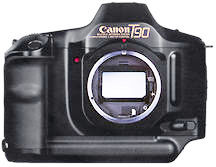
The Canon T-90 was the last model that uses FD-mount prior to the shift to the autofocus EF EOS system. It hardly lasted a year since its inception but what an impact it has created on the design of future SLR. Every inch a classic, despite after more than 15 years, this camera is still hard to replicate even by today's standard. It was also widely acclaimed as one of the true Classic camera of modern times. Here comes a common Message Board designed specifically for Canon T90 SLR model - this is especially useful when you realize ALL Canon FD mount SLRs have long been discontinued you may require a public forum for common support and sharing mutual knowledge or experience among many of you. This Site has proved to be quite popular and I am quite happy to see these effort was not wasted and special thanks to ALL the volunteered Site Maintainers of this Message Board. Enjoy.
This site is specifically created for this great SLR cameras by Canon. Please don't mail me other than constructive suggestions or rectifying mistakes found in this site, thanking you in advance. Since this is a non-profitable resource site - The developer of this site reserves the rights to censor or delete any inappropriate, unrelated, misleading or excessively hostile messages posted herein. If your intention is to dispose your Canon cameras or its accompanying accessories or looking for a used model or any of its system components, please use a separate section with a higher volume of traffic Free Trade Zone site instead. The Photography In Malaysia has no Guestbook on its own, because it is an integral part of the MIR site. But if you want to leave a note on your experience visiting this site, you may use the MIR's Guestbook at another new window by clicking on the Guestbook Link.
Post a Message to the Message Board
A
kind reminder: Please do
not misuse
of this message board system.
Back to Main Index Page of
Canon T-90 SLR Camera Website
1. From : gene austin (photobulldog@yahoo.com)
Url : http://
Date : 03:38 AM Sunday 23 January, 2005
I have a T-90 that had been modified to take a PC cord to fire older strobe units and on rewind leave part of the leader out of the film cassette. If I rewind a roll of film half way through , and then wish to re insert it into the camera, is there any way to advance the film past the shots previously taken ?2. From : Ketil Johansen (ketiljo@gmail.com)
Url : http://
Date : 05:16 AM Saturday 22 January, 2005
Terry, Se http://www.canonfd.com/ketil for information and pictures on how to take of the top of the T90. Ketil3. From : Terry Bramer (terrybramer@lineone.net)
Url : http://
Date : 01:24 AM Saturday 22 January, 2005
Can anyone please tell me how to dismantle the T90 sufficiently so that I will be able to replace the lithium memory back-up cell? Is this a practicable job for someone with some instrument repair experience? Regards - Terry Bramer4. From : Mickey Oberman (mickeyobe@sympatico.ca)
Url : http://
Date : 02:03 PM Friday 21 January, 2005
Herb, P-Wide 1 or 2 or 3 will decrease the aperture setting and, consequently increase your depth of field and also your exposure time. P-Tele 1 or 2 or 3 will increase your shutter speed to better stop action and will decrease your depth of field. These settings limit your camera's automatic selection ranges. When used in Variable-shift programme AE, you are, in effect, making an approximate selection of either aperture or shutter speed but severely limiting that selection. I never liked this feature and never use it preferring instead to select my own depth of field (Aperture-priority AE) or shutter speed (Shutter-priority AE) from the full available range. On those few occasions when I wish to use full Programme Mode I set the camera to just plain P. I hope this is clear. Mickey5. From : Herb Trent (the_king@norcomcable.ca)
Url : http://
Date : 07:59 AM Friday 21 January, 2005
I have just purchased a t-90 and I am wondering what the P-1,2,3 mean under wide and tele in the variable shift program AE. What does each one do?6. From : Kevin Russ (kevin.russ1@ntlworld.com)
Url : http://
Date : 06:48 PM Sunday 16 January, 2005
Hi I've just brought my T90 out of hibernation for a long period of time in order to attempt to sell it. It's generally in good condition although maybe about 10 yrs old now. Anyway thought I'd give it a once over to ensure everything is ok but have noticed that with batteries and a film loaded when I switch on the Single pointer is flashing and prevents me from taking the photograph. Is this a fault or have I forgotten something as I've not used it for a long time ? Also anyone know how much these cameras are worth now that Digital have taken over ? Thanks in advance Kevin7. From : Matt (knobby@runbox.com)
Url : http://
Date : 01:00 PM Friday 14 January, 2005
Does anyone know if the T90 can be used with the Vivitar TTL 6000AF ring flash? Feedback is most appreciated.
8. From : Dennis (misterkash@sympatico.ca)
Url : http://www.oyamaphotography.com
Date : 10:22 AM Tuesday 11 January, 2005
Ashiq, If you increase the aperture setting you will need to decrease the shutter speed. Under low lighting conditions you shutter speed will be fairly low. Yes, a tripod would be most essential.
DOF varies with focal length.
DOF @ f8.0 would be greater on a smaller focal length than a larger.
Use the DOF markings on the lens. The two DOF aperture marks will indicate the minimum and maximum DOF distance.9. From : Ken D (kdurling@comcast.net)
Url : http://
Date : 01:27 AM Tuesday 11 January, 2005
Ashiq - There are two essential missing components to your question: a) DOF at any given aperture varies with focal length, and b) DOF increases with subject distance. The wider the lens the greater the DOF, and the further the subject the more DOF. You should also familiarize yourself with the concept of "hyperfocal distance" (do a Google search). With a wide angle lens you can often achieve sufficient DOF at f/5.6 or f/8. Film speed is an important factor, but basically, yes, you need to use a tripod with the low shutter speeds in dim light shooting. Image stabilization can also be a help, but that is not available for FD lenses. There a number of slow shutter speed techniques one can use in the absence of a tripod: practice the shutter "squeeze"; holding your breath; brace against a tree or wall; a strap can be attached to the tripod socket which then goes under your foot - pull up for stability; sometimes I even use a cable release while hand-holding to decrease camera motion. Ken10. From : ashiq INDIA (ashiq999@rediffmail.com)PAGE | 1 | 2 | 3 | 4 | 5 | 6 | 7 | 8 | 9 | 10 | 11 | 12 | 13 | 14 | 15 | 16 | 17 | 18 | 19 | 20 | 21 | 22 | 23 | 24 | 25 | 26 | 27 | 28 | 29 | 30 | 31 | 32 | 33 | 34 | 35 | 36 | 37 | 38 | 39 | 40 | 41 | 42 | 43 | 44 | 45 | 46 | 47 | 48 | 49 | 50 | 51 | 52 | 53 | 54 | 55 | 56 | 57 | 58 | 59 | 60 | 61 62 | 63 | 64 | 65 | 66 | 67 | 68 | 69 | 70 | 71 | 72 | 73 | 74 | 75 | 76 | 77 | 78 | 79 | 80 | 81 | 82 | 83 | 84 | 85 | 86 | 87 | 88 | 89 | 90 | 91 | 92 | 93 | 94 | 95 | 96 | 97 | 98 | 99 | 100 | 101 | 102 | 103 | 104 | 105 | 106 | 107 | 108 | 109 | 110 | 111 | 112 | 113 | 114 | 115 | 116 | 117 | 118 | 119 | 120 | 121 | 122 | 123 | 124 | 125 | 126 | 127 | 128 | 129 | 130 | 131 | 132 | 133 | 134 | 135 | 136 | 137 | 138 | 139 | 140 | 141 | 142 | 143 | 144 | 145 | 146 | 147 | 148 | 149 | 150 | 151 | 152 | 153 | 154 | 155 | 156 | 157 | 158 | 159 | 160 | 161 | 162 | 163 | 164 | 165 | 166 | 167 | 168 | 169 | 170 | 171 | 172 | 173 | 174 | 175 | 176 | 177 | 178 | 179 | 180 | 181 | 182 | 183 | 184 | 185 | 186 | 187 | 188 | 189 | 190 | 191 | 192 | 193 | 194 | 195 | 196 | 197 | 198 | 199 | 200 | 201 | 202 | 203 | 204 | 205 | 206 | 207 | 208 | 209 | 210 | 211 | 212 | 213
Url : http://
Date : 06:21 PM Monday 10 January, 2005
sir, I have some general questions regarding the selection of apertures in 35mm SLR film photography. 1. We know that low aperture (high f no:)is rquired for full depth of view photos. ie f11,f16,f22 etc. Then how will we take photos at low light conditions(eg:at dusk)and want to get full depth of feild,here we may be forced to use med:apertures such as f5.6/f4.5 etc.And when we use this aperture then also only a part of the subject will be in clear.How we can obtain full depth of field at low lights and at night. 2. Is it true that this matter is directly proportional to lens aperture markings ? ie, a 50mm f1.8 lens will give a DOF at dusk and night,is it correct. and a 35-135mm f 3.5-4.5 lens at evening with Av mode f5.6 will give low DOF? is it also true.When we select f16 or f11 we must required to use tripods an dusk,is there any other way to take photos w/o using tripods? please give me detailed sulution for the above matter.If any weblinks are there please also provide me those links.
| Post a Message to the Message Board |
Archived Messages of Previous Postings
001-050 | 051-100 | 101-150 | 151-200 | 201-250 | 251-300 | 301-350 | 351-400 | 401-450 | 451-500 | 501-550 | 551-600 | 601-650 | 651-700 | 701-750 | 751-800 | 801-850 | 851-900 | 901-950 | 951-1000 | 1001-1050 | 1051-1100 | 1101-1150 | 1151-1200 | 1251-1250 | 1251-1300Maintainers for Canon T-90 Message Board:
Terry Carraway (TCarraway@compuserve.com), Mickey Oberman (mickeyobe@rogers.com); Kaipin (kaipinc@tm.net.my), Tom Rigilano (trigilano@yahoo.com) & Irwin (Dr Strangeluv)Back to Main Index Page of
Canon T-90 SLR Camera WebsiteBack to Message Board of Canon T-90 SLR Camera(s)
Disposing/Looking
for New/Used photographic equipment
on Canon T-90 camera
Administrator Page

Home - Photography in Malaysia
Copyright © 2007. leofoo ®. MIR Web Development Team.
Version three Re-Programmed by our in-house Fairuz Sulaiman, improved from original version by Ang Seng Leong ,Yeak Ngai Siew, Rizal Yahya, Halimaton Yahya (Members of the MIR Web Development Team)MIR Guestbook On-line. Developed & Copyright@ 2001 by MIR Communications Sdn. Bhd.