|
The Canon T-90 System |
|
Modern
Classic SLRs Series : |
|
The Canon T-90 System |
|
Modern
Classic SLRs Series : |
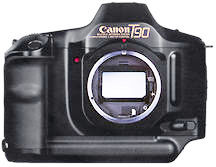
The Canon T-90 was the last model that uses FD-mount prior to the shift to the autofocus EF EOS system. It hardly lasted a year since its inception but what an impact it has created on the design of future SLR. Every inch a classic, despite after more than 15 years, this camera is still hard to replicate even by today's standard. It was also widely acclaimed as one of the true Classic camera of modern times. Here comes a common Message Board designed specifically for Canon T90 SLR model - this is especially useful when you realize ALL Canon FD mount SLRs have long been discontinued you may require a public forum for common support and sharing mutual knowledge or experience among many of you. This Site has proved to be quite popular and I am quite happy to see these effort was not wasted and special thanks to ALL the volunteered Site Maintainers of this Message Board. Enjoy.
This site is specifically created for this great SLR cameras by Canon. Please don't mail me other than constructive suggestions or rectifying mistakes found in this site, thanking you in advance. Since this is a non-profitable resource site - The developer of this site reserves the rights to censor or delete any inappropriate, unrelated, misleading or excessively hostile messages posted herein. If your intention is to dispose your Canon cameras or its accompanying accessories or looking for a used model or any of its system components, please use a separate section with a higher volume of traffic Free Trade Zone site instead. The Photography In Malaysia has no Guestbook on its own, because it is an integral part of the MIR site. But if you want to leave a note on your experience visiting this site, you may use the MIR's Guestbook at another new window by clicking on the Guestbook Link.
Post a Message to the Message Board
A
kind reminder: Please do
not misuse
of this message board system.
Back to Main Index Page of
Canon T-90 SLR Camera Website
1. From : Luigi D. Sandon (cp@sandon.it)
Url : http://portfolio.sandon.it
Date : 09:56 PM Saturday 25 September, 2004
Syd: in my opinion the T90 has many advantages over the A-1 for macro photography, especially TTL flash, and faster flash sync speed, and in macro those helps a lot. Metering flash in macro, especially when the camera-subject distance is different than the flash-subject distance, and/or using more than one flash is really tricky. The A-1 meter is sligthly more sensitive, but has no spot/semi-spot mode, and the A-1 has a relatively "slow" sync.
Moreover I think the T90 shutter/mirror movement is better dampened than in the A-1, and vibrations are not good with high magnification...2. From : Terrence Bramer (terrybramer@lineone.net)
Url : http://
Date : 07:08 PM Saturday 25 September, 2004
I am contemplating buying a used T90 and would like to know how easy it is to change the lithium CR1220 memory battery. I have heard that this is a complicated procedure, but is this really the case for someone with camera DIY skills. How long does this battery last?
3. From : Syd C (s.croft@blueyonder.co.uk)
Url : http://
Date : 05:01 PM Friday 24 September, 2004
Mickey, The aperture ring was not set at 'A' when I operated the stop-down lever and I'm sure I tried disengaging the stop-down lever and resetting aperture ring, but this did not prevent EEEEE reappearing every time I pressed the shutter release button. Nevertheless, after reading your message I decided to give it another try. For the record, this is precisely what I did: -
1. switched the camera on
2. pressed the battery check button
3. removed the battery tray and replaced it
4. moved the aperture ring from 'A' to manual
5. pressed the stop-down lever
6. pressed the stop-down lever again to release it
7. moved the aperture ring back to 'A'
8. at this point, a sound, reminiscent of a moving solenoid,
came from within the body of the camera.
9. the next time I took a photograph EEEEE did not reappear.
I am very grateful for this, but I am still going to use my A1 for macro-photography.
Many, many thanks - there are times when I often wonder what I would do without this message board, it is far superior to anything else I have looked at for cameras made by companies other than Canon.4. From : Mickey Oberman (mickeyobe@sympatico.ca)
Url : http://
Date : 07:02 AM Friday 24 September, 2004
Syd C, If your aperture ring is set at "A" when you press the stopped down lever you will get EEEEE E E when you depress the shutter release. Disengage it and set it at your desired aperture and all should be well. Mickey5. From : Syd C (s.croft@blueyonder.co.uk)
Url : http://
Date : 06:04 PM Thursday 23 September, 2004
Luigi, Mickey, Tom: At last I have got around to trying my T90 in conjunction with a set of Autobellows. I followed all the advice you gave me, to the letter, actuated the dual cable release, and guess what? I have now got a touch of the dreaded EEE HELP. Now either there is something wrong with my camera which only becomes apparent when I operate the stop-down button, or I am doing something wrong. Nvertheless, I will continue through this roll of film, re-setting the camera with the battery check button every time I take a photograph and hopefully it will cure itself as it has done before, when I change the film. However, never again will I touch the stop-down button, the use of my T90 in every other respect is too precious to risk problems. I will revert to using my A1 when taking macrophotographs. Many thanks for all your help.6. From : Luigi D. Sandon (cp@sandon.it)
Url : http://portfolio.sandon.it
Date : 11:22 PM Friday 17 September, 2004
SydC: TTL will take care of the light loss, what I meant is one can end up to be forced to use too long exposure times. For some subjects (i.e. insects) this is impossible, and a light source is needed.
> the lens can end up so close to the subject it must be
> difficult to illuminate it.
Yes. That's why, for example, the special 20mm and 35mm macro lenses are smaller and have a conical front end. There are some special lighting systems for such sitautions, like small "spots" using an optical fiber.
> the shutter blind is in the down position
> to prevent light entry when the eye is not
> looking through the viewfinder.
When using TTL flash, the exposure is metered while taking the photo. The mirror is up, and no light from the viewfinder can interfere.7. From : Mickey Oberman (mickeyobe@sympatico.ca)
Url : http://
Date : 10:07 PM Thursday 16 September, 2004
Syd C., I believe a shorter focal length lens will enable you to get a larger image without getting too close to the subject. I am not trying to be facetious. If you open the viewfinder shutter blind and put your eye to the viewfinder you will be able to see the viewfinder information. You obviously cannot see it with the blind closed and your eye elswhere. You could leave the blind closed and put your faith in the T90's judgement. I hope I have not misinterpreted your question. Mickey8. From : jürgen grosse (JG-Leasing@utanet.at)
Url : http://
Date : 12:54 PM Thursday 16 September, 2004
to Ken D. and Mickey : the viewfinder lens is damaged - thank you for helping to find the "right" word.9. From : Syd C (s.croft@blueyonder.co.uk)
Url : http://
Date : 05:34 AM Thursday 16 September, 2004
Luigi: I appreciate what you say due about the light losses caused by the bellows extension, but I thought the TTL metering took care of that. Am I wrong? Another lighting problem is that with high values of magnification, according to the tables, the lens can end up so close to the subject it must be difficult to illuminate it. Long term, I hope to purchase a ring flash but, for the time being, I intend to experiment with my 300TL bounced off an appropriate surface to diffuse the light and herein lies my next problem. When taking conventional photographs with the 300TL mounted on top of the camera, the shutter release button is pressed halfway down to enable the camera/flash combination to set itself and this can be checked by looking at the information visible in the viewfinder. How is this possible to this with the double cable release, particularly when the shutter blind is in the down position to prevent light entry when the eye is not looking through the viewfinder. Many thanks for all your help.10. From : Luigi D. Sandon (cp@sandon.it)PAGE | 1 | 2 | 3 | 4 | 5 | 6 | 7 | 8 | 9 | 10 | 11 | 12 | 13 | 14 | 15 | 16 | 17 | 18 | 19 | 20 | 21 | 22 | 23 | 24 | 25 | 26 | 27 | 28 | 29 | 30 | 31 | 32 | 33 | 34 | 35 | 36 | 37 | 38 | 39 | 40 | 41 | 42 | 43 | 44 | 45 | 46 | 47 | 48 | 49 | 50 | 51 | 52 | 53 | 54 | 55 | 56 | 57 | 58 | 59 | 60 | 61 | 62 | 63 | 64 | 65 | 66 | 67 | 68 | 69 70 | 71 | 72 | 73 | 74 | 75 | 76 | 77 | 78 | 79 | 80 | 81 | 82 | 83 | 84 | 85 | 86 | 87 | 88 | 89 | 90 | 91 | 92 | 93 | 94 | 95 | 96 | 97 | 98 | 99 | 100 | 101 | 102 | 103 | 104 | 105 | 106 | 107 | 108 | 109 | 110 | 111 | 112 | 113 | 114 | 115 | 116 | 117 | 118 | 119 | 120 | 121 | 122 | 123 | 124 | 125 | 126 | 127 | 128 | 129 | 130 | 131 | 132 | 133 | 134 | 135 | 136 | 137 | 138 | 139 | 140 | 141 | 142 | 143 | 144 | 145 | 146 | 147 | 148 | 149 | 150 | 151 | 152 | 153 | 154 | 155 | 156 | 157 | 158 | 159 | 160 | 161 | 162 | 163 | 164 | 165 | 166 | 167 | 168 | 169 | 170 | 171 | 172 | 173 | 174 | 175 | 176 | 177 | 178 | 179 | 180 | 181 | 182 | 183 | 184 | 185 | 186 | 187 | 188 | 189 | 190 | 191 | 192 | 193 | 194 | 195 | 196 | 197 | 198 | 199 | 200 | 201 | 202 | 203 | 204 | 205 | 206 | 207 | 208 | 209 | 210 | 211 | 212 | 213
Url : http://portfolio.sandon.it
Date : 05:43 PM Wednesday 15 September, 2004
Syd C: lighting in macro is very important due to the loss caused by the bellows extension. The flash mounted on the camera is not useful, because the light on the subject could be uneven, too "flat", and the bellows/lens complex itself could cast its shadow on the subject. The flash should be used detached from the camera (there are extension arms for that purpose), and to avoid strong, black shadows at least two flash are required. The camera-subject-flashes angle depends on the desired effect, a simple setup uses two flashes at 45° degress each. Another option is a ring flash mounted on the lens (i.e. Canon ML-2 or ML-3). Canon sells accessories to use the 300TL detached from the camera - and to connect up to four units - mantaining TTL exposure. They are the same used by some EOS units, therefore are available new and used. Without TTL, metering a flash very close to the subject, and/or multiple flash units may be tricky, unless using a separate flash meter. PS: thank you for appreciating my style - being a non native English speaker - I am Italian - I am happy to know what I write is not too bad :)
| Post a Message to the Message Board |
Archived Messages of Previous Postings
001-050 | 051-100 | 101-150 | 151-200 | 201-250 | 251-300 | 301-350 | 351-400 | 401-450 | 451-500 | 501-550 | 551-600 | 601-650 | 651-700 | 701-750 | 751-800 | 801-850 | 851-900 | 901-950 | 951-1000 | 1001-1050 | 1051-1100 | 1101-1150 | 1151-1200 | 1251-1250 | 1251-1300Maintainers for Canon T-90 Message Board:
Terry Carraway (TCarraway@compuserve.com), Mickey Oberman (mickeyobe@rogers.com); Kaipin (kaipinc@tm.net.my), Tom Rigilano (trigilano@yahoo.com) & Irwin (Dr Strangeluv)Back to Main Index Page of
Canon T-90 SLR Camera WebsiteBack to Message Board of Canon T-90 SLR Camera(s)
Disposing/Looking
for New/Used photographic equipment
on Canon T-90 camera
Administrator Page

Home - Photography in Malaysia
Copyright © 2007. leofoo ®. MIR Web Development Team.
Version three Re-Programmed by our in-house Fairuz Sulaiman, improved from original version by Ang Seng Leong ,Yeak Ngai Siew, Rizal Yahya, Halimaton Yahya (Members of the MIR Web Development Team)MIR Guestbook On-line. Developed & Copyright@ 2001 by MIR Communications Sdn. Bhd.